Service Directive 001 / Designing for Retention

PROTOTYPING THE
CORE LOOP.

In the competitive landscape of gaming apps, a project's viability is often decided within the first thirty seconds of interaction. At StructureCore, our design philosophy bypasses superficial aesthetics to focus on the mechanical "Why." We believe that a high-fidelity mockup is useless if the underlying player journey is friction-heavy.

Our mission is to bridge the gap between abstract game mechanics and tangible, clickable reality. By prioritizing clarity over clutter, we ensure that players—whether navigating a complex mobile RTS inventory or a lightning-fast shooter HUD—remain immersed rather than frustrated.

[SYSTEM_STATUS: OPERATIONAL]

The Next Step

Ready to stress-test your concept before the first line of code?

Inquire Portfolio Access

Engineering Intuition

We don't just draw screens; we architect systems. Our UI/UX services are tailored to the specific constraints of the gaming hardware, from caloric-efficient mobile renders to low-latency desktop overlays.

01. ENGINE
[PHASE_A]

UI/UX Blueprinting

Designing tailored interfaces for specific genres. Whether it's the high-density HUD of a tactical shooter or the resource-heavy menus of a 4X strategy game, we ensure the player's cognitive load is optimized for the action at hand.

Optimization: Cognitive Load
[PHASE_B]

Mechanical Prototyping

We translate abstract mechanics into clickable ProtoPie simulations. This allows stakeholders to "feel" the core gameplay loop and monetization flow before committing to expensive back-end development cycles.

Validation: Input Latency
[PHASE_C]

Modular Style Guides

Consistency is the backbone of immersion. We deliver comprehensive design tokens, icon sets, and button textures that maintain visual integrity across iOS, Android, and Desktop versions.

Output: Semantic Assets

Architectural Trade-offs

Visual Fidelity vs. Frame Stability

High-complexity shaders in UI can drain battery and drop frames during peak combat. We mitigate this by using vector-based assets and baked lighting for non-interactive elements.

Feature Richness vs. Onboarding Friction

Deep strategy games require complex menus. We solve for this through "progressive disclosure," only showing advanced stats when the player reaches specific level milestones.

Cross-Platform Sync vs. Input Latency

Optimizing for global web3 integration often introduces lag. We prioritize server-side response metrics (ms) in our prototypes to ensure fair competitive play.

[FIELD_NOTES // CASE_B-12]

Solving for the "Quit Moment"

Recently, we worked with an Italian indie studio whose mobile TCG (Trading Card Game) was seeing a 65% drop-off during the first menu interaction. The problem wasn't the mechanics — it was the inventory density.

By applying our Decision Lens criteria, we identified that the information hierarchy prioritized 'Flavor Text' over 'Mana Cost'. We rapidly iterated a prototype that:

  • Re-centered the card-dragging axis for thumb-reach ergonomics.
  • Introduced a haptic feedback rhythm for "Invalid Moves."
  • Simplified the card shop flow to a single-tap purchase sequence.

Result: Post-launch stress tests showed player retention increased by 22% within the first 48 hours of gameplay.

Asset Decomposition

[VISUAL_ARCHITECTURE_PREVIEW]

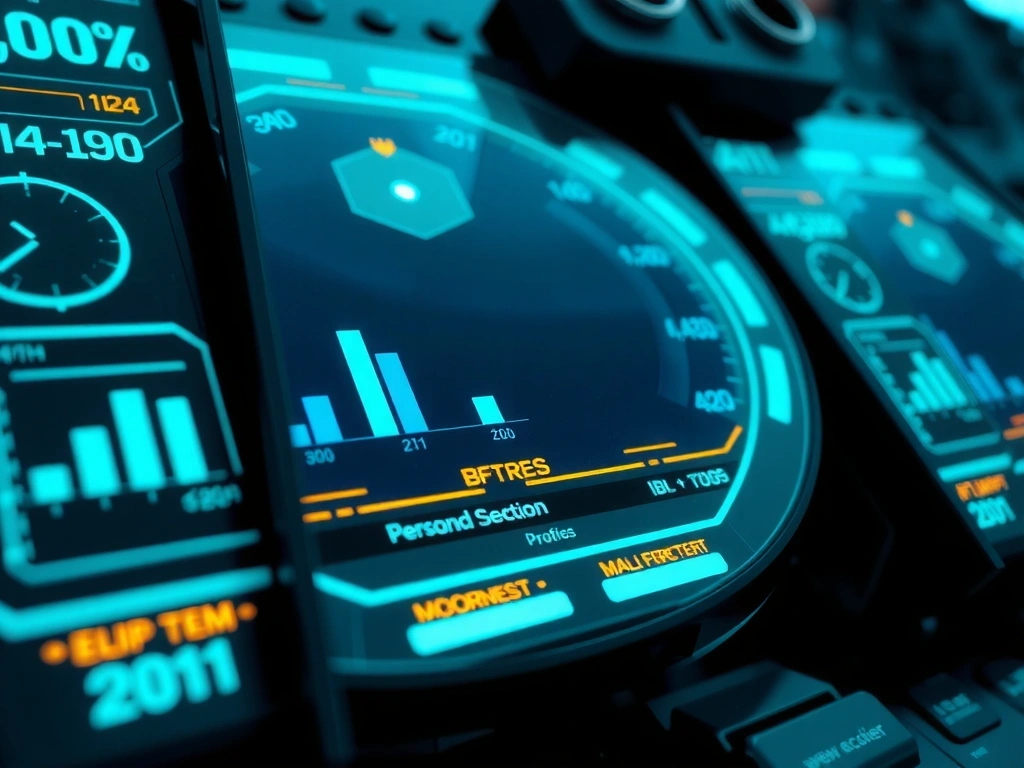
Gaming UI HUD Visualization

Concept: Tactical HUD

Optimizing peripheral vision for high-speed combat scenarios.

Mobile Game Wireframe Blueprint
UI Element Textures

Choose Your Strategy

Our design process is built for developers who prioritize hard metrics over artistic whims. We optimize for what truly keeps a game alive.

What it Optimizes

  • First-Time User Experience (FTUE) Reducing friction in tutorials and sign-ups.
  • Action Intent Clarity Visual cues that make every button-tap predictable.
  • Platform Native Response Leveraging specific hardware haptics and speeds.

What it Sacrifices

  • Over-Ornamentation We remove unnecessary "eye candy" that slows down UX flow.
  • Universal Layouts We reject one-size-fits-all templates for genre-specific UI.
  • Passive Navigation No complex burger-menus if a dynamic context-bar works faster.

BUILD THE FUTURE
OF PLAY.

Ready to transform your game mechanics into a market-ready interface? StructureCore provides the technical expertise to bridge design and deployment.

+3906... Direct Comms
Roma, IT Studio Origin
24/5 Ops Working Window
v1.2.06 Build Version